Starting therapy can bring a mixture of hope, uncertainty, nervousness, and relief.
You may wonder what you're supposed to say, whether you'll be asked difficult questions, or how you'll know if the therapist is right for you. Understanding what to expect can make the process feel a little more comfortable.
Your first session is an opportunity for you and your therapist to start getting to know each other.
The therapist may ask what brought you to therapy, what has been happening in your life, and what your goals are. They may also ask about your relationships, health, family history, past experiences, current stressors, and any other symptoms you have noticed.
You don't have to explain everything perfectly. You can begin wherever it feels most natural.
It's completely acceptable to say:
A supportive therapist will respect your pace. You shouldn't be pressured to share more than you're ready to.
No. Therapy is a process, not a single conversation.
The first couple of sessions allow you to provide an overview of what you're experiencing. Trust and understanding develop over time. You decide when and how much you want to share.
The therapist will also explain confidentiality, session length, fees, cancellation policies, communication between appointments, and any limits to confidentiality. This is also your opportunity to ask questions about their experience and therapeutic approach.
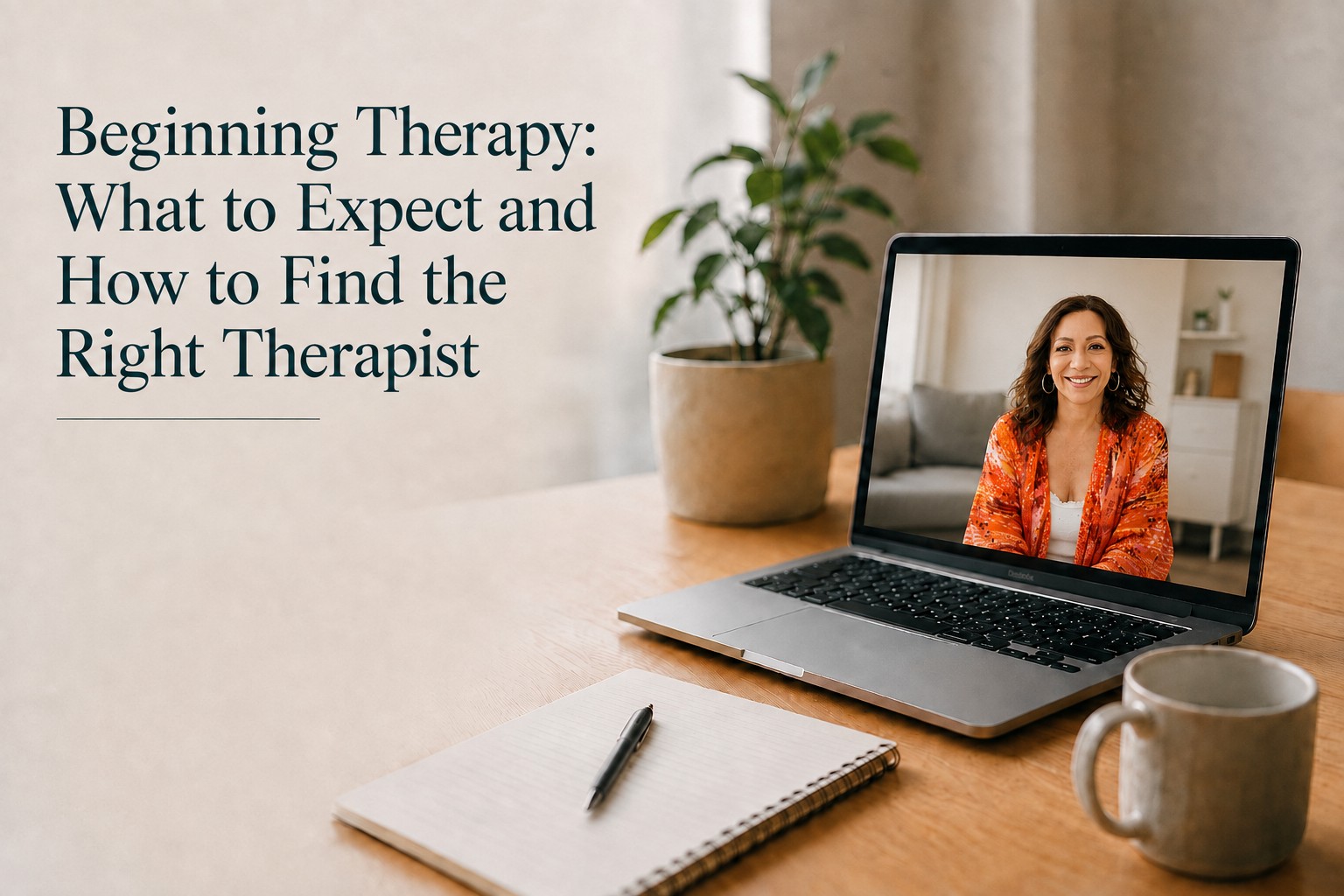
Online therapy takes place through a secure video platform. Like in-person therapy, it allows you to speak privately with a therapist about your thoughts, emotions, relationships, and experiences.
Before an online session, it helps to:
Some people appreciate being able to attend therapy from home. It can make appointments more accessible for people with busy schedules, transportation barriers, mobility concerns, caregiving responsibilities, or anxiety about attending an unfamiliar office.
Attending from home can, however, make privacy more difficult. It's important to choose a time and place where you're able to speak openly and won't be interrupted.
The purpose of therapy remains the same in either setting: to create a supportive space where you can explore what you're experiencing and work toward meaningful change.
The primary difference is the environment.
In-person therapy offers physical separation from your everyday surroundings. Some clients value being in a calm, dedicated space and find face-to-face interaction more comfortable.
Online therapy offers convenience, flexibility, and access from a familiar environment. Some clients find it easier to open up from home.
Either option is fine! The right choice depends on your needs, level of privacy, comfort, schedule, and the kind of support you're seeking. Talk therapy is available in person, by video, or by phone – you choose.
Finding the right therapist is about more than reviewing their qualifications. Training and experience matter, but so does how you feel with the therapist.
You may want to consider:
It's okay if you don't instantly feel comfortable discussing certain things – some nervousness is normal. You're probably on the right track if you feel your therapist is patient, attentive, respectful, and interested in understanding you.
A consultation isn't an examination you need to pass, it's an opportunity to decide whether the therapist is a good fit for you.
Consider asking:
A good therapist will welcome thoughtful questions.
It's okay to speak with another therapist.
Not every therapeutic relationship will be the right match. This doesn't mean therapy can't help you. Sometimes you may want someone with a different personality, area of experience, cultural understanding, communication style, or therapeutic approach.
Discuss your concerns directly with the therapist. A thoughtful conversation about what is not working can sometimes strengthen the relationship.
You're not expected to enter therapy with all the answers. You and your therapist will work together to understand what you need and decide what feels most supportive for you.
At Tranquil Shores, we recognize that reaching out can feel scary. We work to make therapy feel welcoming, transparent, and respectful of your pace. We love questions! Come and learn about our therapists and find the help that feels right for you.
Reach out and we'll help match you with the right therapist and next steps.
Book a Session →